Case Study: Bridging Deep Tech and Biomedical AI (The HERMES Project)
1. Executive Summary
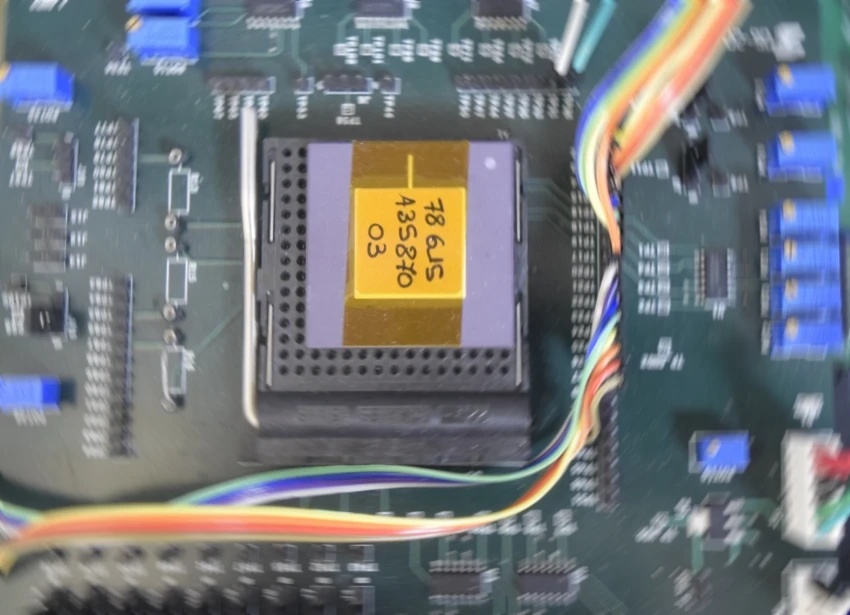
Development of a compact, closed-loop neuromorphic computing system designed to detect and suppress epileptic seizures in biological tissue models. Throughout international deployments across four European countries, my primary focus was architecting the digital controller, implementing bio-inspired learning algorithms, and translating complex hardware operations into intuitive, accessible tools for medical researchers.
2. The Challenge
Advancing biomedical AI requires integrating novel hardware—like memristor-based Spiking Neural Networks (SNNs)—directly with biological systems. However, cutting-edge microelectronics are notoriously complex to operate. The project faced a dual challenge: technically, building a real-time, closed-loop system capable of adapting to biological signals; and strategically, making this highly complex neuromorphic hardware accessible to wet-lab biologists and medical doctors who lacked deep microelectronics training.
3. My Role & Execution
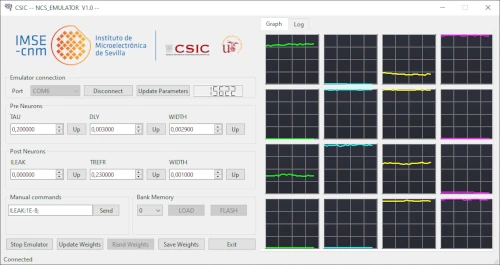
- User-Centric Product Development: Identified the usability friction of raw command-line scripts for non-technical stakeholders. Designed and implemented a fully visual GUI tailored for medical professionals, allowing them to easily manage the neuromorphic hardware and interpret real-time data without needing to understand the underlying code.
- Cross-Border R&D Collaboration: Deployed on-site in Aarhus, Milan, Genoa, and Tampere. Acted as a key technical facilitator, resolving integration roadblocks between distinct international teams (engineering and medical) and negotiating solutions to keep project milestones on track.
- Digital Architecture & Algorithm Design: Developed the backend of the digital controller using an MCU/SoC-FPGA architecture. Engineered and implemented a Stochastic Binary STDP (Spike-Timing-Dependent Plasticity) learning algorithm adapted specifically for binarized memristors and FP2SPK front-ends.
- System Validation: Led the hardware characterization and executed closed-loop experiments using Neural Mass Models to successfully emulate and autonomously suppress epileptic tissue behavior.
4. The Impact & Deliverables
- Usability & Adoption: Successfully delivered a functional, user-friendly neuromorphic platform that empowered wet-lab experts to conduct complex biomedical experiments independently.
- Consortium Deliverables: Directly contributed to critical European project milestones, internal reporting, and strategic deliverables under strict R&D frameworks.
Publications & Knowledge Sharing
Co-authored several peer-reviewed papers validating the system’s architecture, experimental success, and bridging the gap between neuromorphic engineering and neuroscience.
- Neuromorphic hardware based on memristive nanodevices for seizure detection and recovery
- A Memristor-Inspired Computation for Epileptiform Signals in Spheroids
5. About the HERMES project:
6. More
Tech Stack
- Core: SNN, RRAM Memristors, TSMC180
- Learning: Stochastic Binary STDP
- Control: SoC-FPGA, Python, C++, Verilog, Xilinx, STM32
- Management: GitLab, Project Management methodologies
Images